ARTICLE
Top Structural Engineering Firms for Water and Wastewater Treatment Plants
A search for a structural engineer for a treatment plant usually turns into a list of company names. A list does not tell you what to check for — containment, exposure and watertightness do.
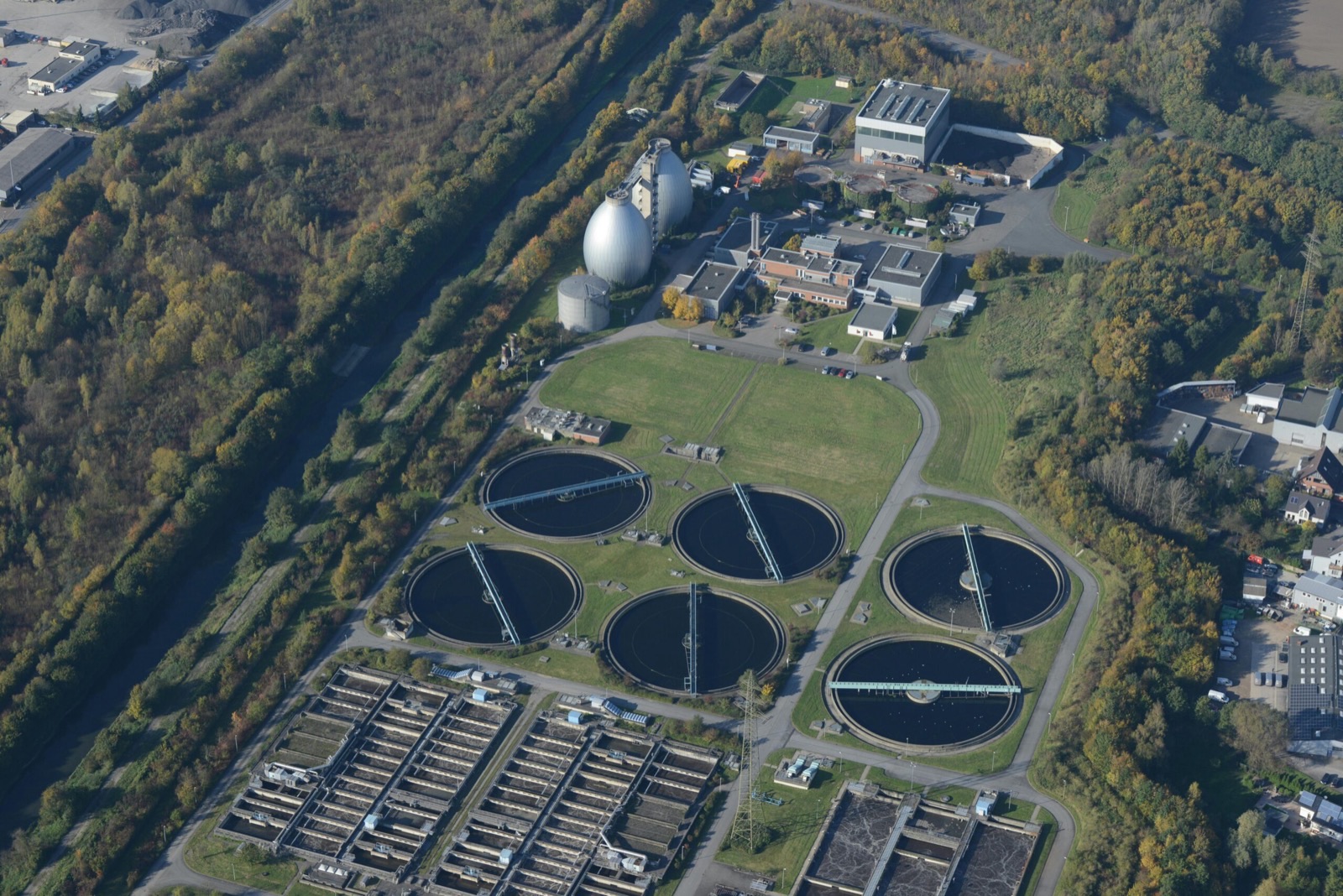
What water and wastewater engineering demands
A tank, a clarifier or a digester looks like a straightforward concrete structure from the outside: walls, a base slab, a roof or a cover. What the outside does not show is that most of these structures are governed by serviceability, not strength — they are designed to keep liquid in or out for decades, and a structure that passes every strength check can still fail by leaking.
That single difference changes what capability looks like on a water or wastewater project. The firm needs to be fluent in liquid-retaining design, not reinforced concrete generally; it needs to understand the specific chemical environment a digester or a dosing area creates; it needs to handle buried structures against groundwater and soil loads most buildings never see; and it needs joint and waterstop detailing to be a first-order concern, not an afterthought once the walls are drawn. The distinction is easy to state and easy to design past, which is why it is worth checking for explicitly rather than assuming a concrete specialist has already accounted for it.
None of this shows up on a rendering. It shows up in the detail sheets, the exposure classes and the check record, which is exactly where it is worth looking before appointing a partner.
Containment structures and liquid-retaining design
Tanks, channels, reservoirs, clarifiers and digesters are designed to a tightness class, not just a strength limit state — a check on crack width and deflection that is usually tighter than the strength check the same wall would need to pass on a building that does not hold liquid. Getting this wrong does not collapse the structure; it produces a tank that holds water for a season and then weeps through hairline cracks the strength calculation never flagged.
A capable partner treats the tightness class as a design input from the first sketch, not a check applied afterwards. Reinforcement spacing, wall thickness and joint layout are all set to hit a crack-width limit specific to what the structure holds and how serious a leak would be, and that limit is different for a clean-water tank than for a digester. Two firms can each submit a structurally sound wall section, and only one of them has actually solved the problem the client is paying for.

Aggressive chemical exposure and material selection
Wastewater is not a neutral environment. Digesters, dosing areas and the headspace above certain treatment stages expose concrete and steel to hydrogen sulphide, other corrosive gases and chemical dosing that a clean-water structure never sees, and the exposure class has to be set by what the specific structure holds, not by a blanket assumption applied across the whole plant.
That affects cover, concrete mix and coating specification, and it affects which steel elements are viable at all in the most aggressive zones. A firm that treats every tank on a site the same way, rather than setting exposure class structure by structure, is usually the one whose durability assumptions do not match what actually happens in service. The same plant can reasonably carry three or four different exposure classes across its structures, and a single blanket specification applied to all of them is usually a sign that the classification step, not just a corner, was skipped.
Buried structures and watertightness
Much of a treatment plant sits below grade, which adds groundwater and soil loading, and buoyancy uplift on a structure that is often lighter than the water it displaces once it is emptied for maintenance — a real, recurring load case, not an edge condition. Getting the uplift check wrong is how an emptied buried tank floats.
Watertightness in these conditions is decided at the joints as much as in the wall itself. Every movement and construction joint needs a waterstop, checked for continuity around the full run, because a gap in a waterstop is a leak path that is far more expensive to find once the structure is backfilled and in service than it would have been to catch on the drawing. A capable partner can show how it verifies waterstop continuity before pour, not just that a waterstop is specified. Both checks belong in the calculation package itself, not only in a specification note, because a note does not show which load case was actually run.
Evaluating a partner: the questions that matter
Capability claims are inexpensive to make on a proposal. The following questions are harder to answer well than to ask, and the quality of the answer is the useful signal.

- Can they name the tightness class for a structure like yours, and explain what it sets? A specific answer suggests they have designed to one before.
- How do they set exposure class structure by structure, not plant-wide? A digester and a clean-water tank should never get the same answer.
- Can they show how waterstop continuity is checked before a pour, not just specified on a drawing? A specification is a claim; a check record is evidence.
- How is buoyancy uplift checked for a buried structure taken out of service for maintenance? This is a real load case, and it should not need prompting.
- Who signs the package, and what did they actually check? Named and accountable is different from senior-sounding.
- What is handed over at completion — model, register and check record, or just final drawings? The answer tells you what the operator will actually have in year five.
Standards, and scoping the work so it can succeed
A firm with genuine depth in this sector names its governing standard without hesitation — EN 1992-3, the Eurocode part specifically covering liquid-retaining and containment structures, alongside the base concrete code and the relevant National Annex, or the equivalent liquid-retaining provisions under the code of the country of construction. Utility clients frequently layer their own framework standard on top, covering preferred joint types, waterstop specification and design life, and a capable partner should already expect that layer, not treat it as a surprise.
Because so much of this work sits inside a utility framework or capital programme, the scope document matters as much as the technical answer: which structures, which tightness class each one is designed to, the deliverable list, the review cycle, and a programme broken into dated milestones. A firm that welcomes that level of specificity before it starts is a different proposition from one that treats it as unnecessary paperwork. As with any structural package, the more useful proof of quality is a check record showing what was tested and by whom, not a general assurance that the standard was followed.