ARTICLE
Elevating Project Success: The Comprehensive Guide to Outsourcing Structural Engineering Services
Outsourcing structural engineering work can go well or badly, and the difference rarely comes down to the skill of the engineers involved. It comes down to how the work was scoped, verified and handed back.

What is actually worth outsourcing
Not all structural engineering work suits an external delivery partner equally well, and pretending otherwise is how outsourcing programmes get a bad reputation. The work that outsources well shares a few traits: it is well-defined by the time it leaves the building, it is checkable against an explicit standard, and its output — a drawing, a model, a schedule — can be verified independently of who produced it.
Detailing and documentation production is the clearest fit: steel and rebar detailing, precast element and mould drawings, BIM modelling and coordination, CAD production and drafting. These are high-volume, standards-governed tasks where the definition of correct does not depend on being in the room. Early-stage concept design, load path decisions still being argued with an architect, and anything requiring frequent, informal, same-day conversation is a weaker fit — not impossible, but it needs a different structure than a drawing package does.
A useful test: if the scope can be written down precisely enough that two competent engineers would produce the same answer, it outsources well. If the scope depends on being present for a decision that has not been made yet, keep it close until it has been.
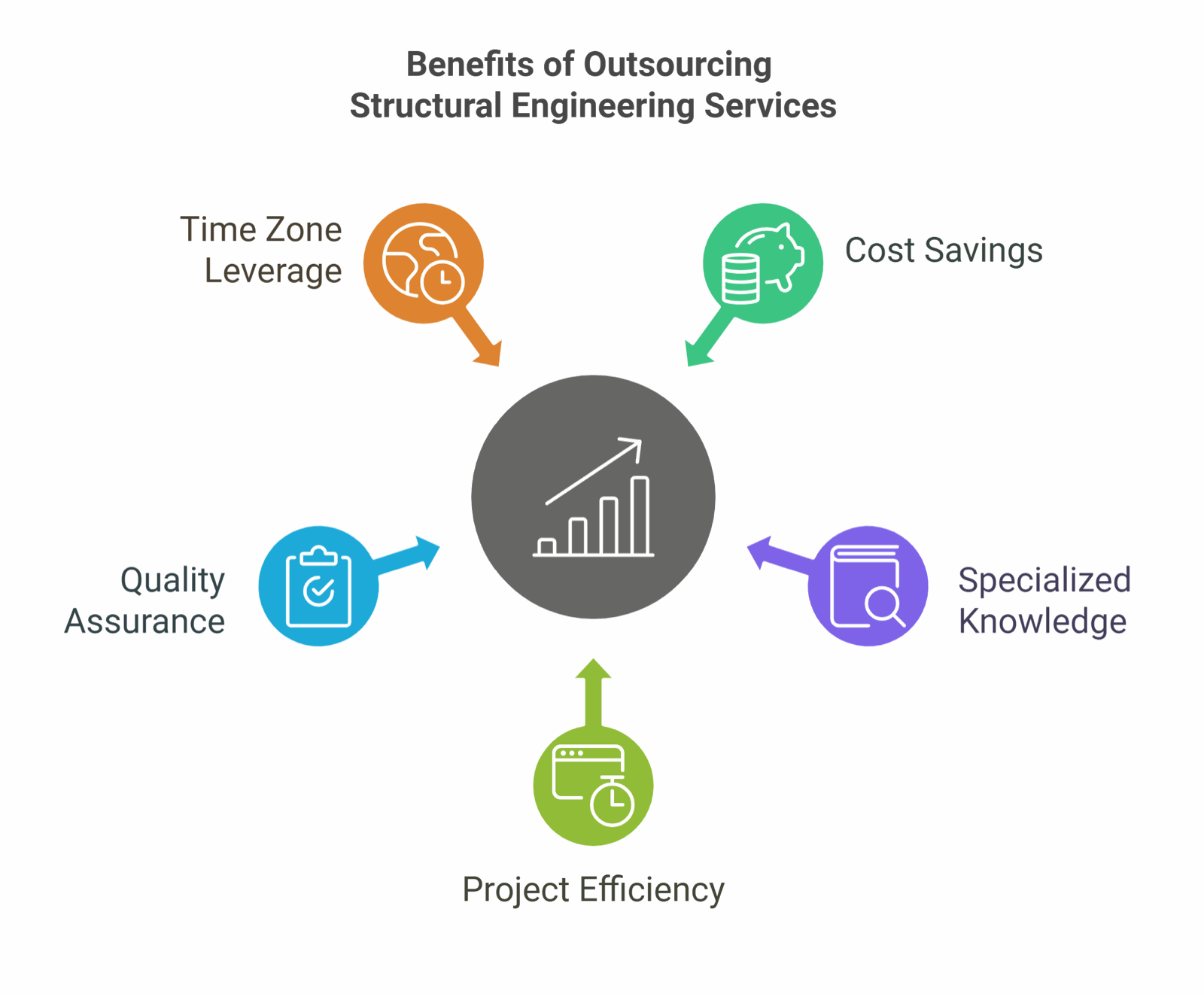
Scoping the work so it can succeed
Most outsourcing disappointments are scoping failures wearing quality complaints as a disguise. A scope document earns its keep before a single drawing is produced.
- The governing standard, named precisely: the specific Eurocode part and National Annex, or the specific AISC edition and sections, not just the code family.
- The design basis the detailing has to follow: loads, connection philosophy, and any project-specific criteria that vary from the code's default.
- The deliverable list, sheet by sheet or model element by element, with the format each one has to be issued in.
- The review and approval cycle: who reviews, how comments are returned, and how many rounds are budgeted.
- The programme, broken into dated milestones a delay can be measured against, rather than a single end date.
A scope this specific takes longer to write than a one-line instruction to detail the building. It also removes almost every disagreement that would otherwise surface in week six.
Verifying quality instead of assuming it
Quality in outsourced engineering is either verified or asserted, and the two are not the same thing wearing different clothes. Assurance is a sentence about experience or process. Verification is evidence: a check record, a named reviewer, a defined set of rules the output was tested against before it reached you.
The practical version of this is straightforward to ask for. What checks ran on this package, and can the results be seen, not just the conclusion? Is dimensional consistency, code compliance and drawing-to-model agreement checked exhaustively, or sampled? Who is the named, qualified engineer who reviewed and signed the package, and what did they actually check, rather than what their title implies? A delivery partner that treats these as reasonable questions, with an answer ready, is a different proposition from one that treats them as an accusation.
Independent spot-checking on your side is still worth doing, especially early in a relationship. It should shrink over time as the check record earns trust — if it does not shrink, that is itself useful information.
Where outsourced engineering goes wrong
The failure modes repeat across enough programmes that they are worth naming plainly.
- The standard was never pinned down. Everyone assumed the other side knew which code, which annex, which project-specific variation applied, and nobody wrote it down.
- There is no register. Revisions circulate by file name and email thread instead of a tracked, current source of truth, and which version is live becomes a daily question.
- Nobody is named. The package is checked, allegedly, by the team, and when something is wrong there is no single accountable signature to trace it back to.
- Capacity arrives as inconsistency. The programme accelerates, more people are added to hit the date, and the standard that one experienced engineer held in their head does not travel with them.
- Comments disappear. A review comment is actioned in one drawing and not the three others it also applied to, because there was no systematic way to propagate it.
None of these are unique to outsourced work — they happen on internal teams too. Outsourcing simply removes the informal correction that proximity used to provide, so the process has to do explicitly what a shared office used to do by accident.
Time zones, handover and the daily rhythm
A time-zone difference is either an asset or a liability depending entirely on how the handover is structured. Used well, a package handed over at the end of one team's day and picked up at the start of another's compresses the calendar: work is genuinely progressing for more hours than either office works alone. Used badly, it means every question waits a full day for an answer and the calendar advantage is spent entirely on latency.
What separates the two is a deliberate daily rhythm: a short handover note at each shift boundary stating what was completed, what is blocked, and what decision is needed before the next session can proceed; a single channel for questions that does not depend on someone being awake to see it immediately; and RFIs logged and tracked to a written answer rather than resolved verbally and forgotten. None of this is complicated. It simply has to be designed rather than assumed.
Choosing and structuring the relationship
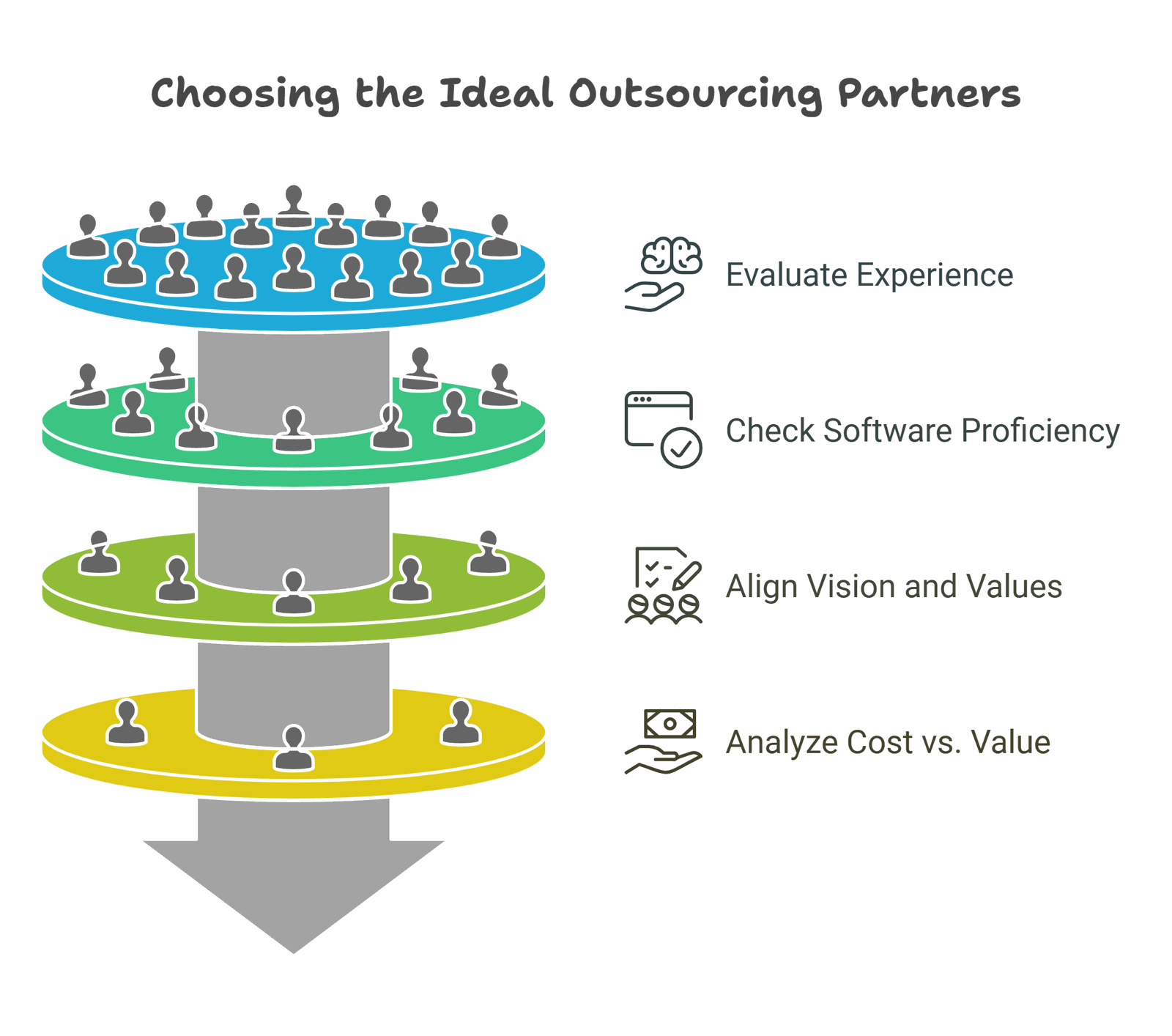
The commercial structure should follow the scope, not the other way around. A well-defined, standards-governed deliverable suits a fixed-price or unit-rate arrangement, because both sides can measure output against a specification agreed in advance. Work that is still being defined suits a time-and-materials arrangement with a capped review point, because paying a fixed price for an undefined scope simply moves the risk onto whoever guessed better.
Beyond price, the questions worth resolving before anything is signed are structural: who is the single accountable contact if something goes wrong, what does escalation look like, what is delivered at project completion — model, register, issue history and check record, not just final drawings — and what happens to that data and any tooling dependency if the relationship ends. A relationship appointed well is not the cheapest quote; it is the one where the answers to those questions were specific instead of reassuring.
Outsourcing structural engineering work is not a decision to make once. Scope it deliberately, verify rather than assume, and it behaves like an extension of your team. Skip any one of those steps and it behaves like exactly what everyone worries it will be.