ARTICLE
Top Data Centre Engineering Companies for Large-Scale Projects
A search for the right engineering partner for a hyperscale campus usually turns into a list of firm names. A list does not tell you what to check for — a framework does.
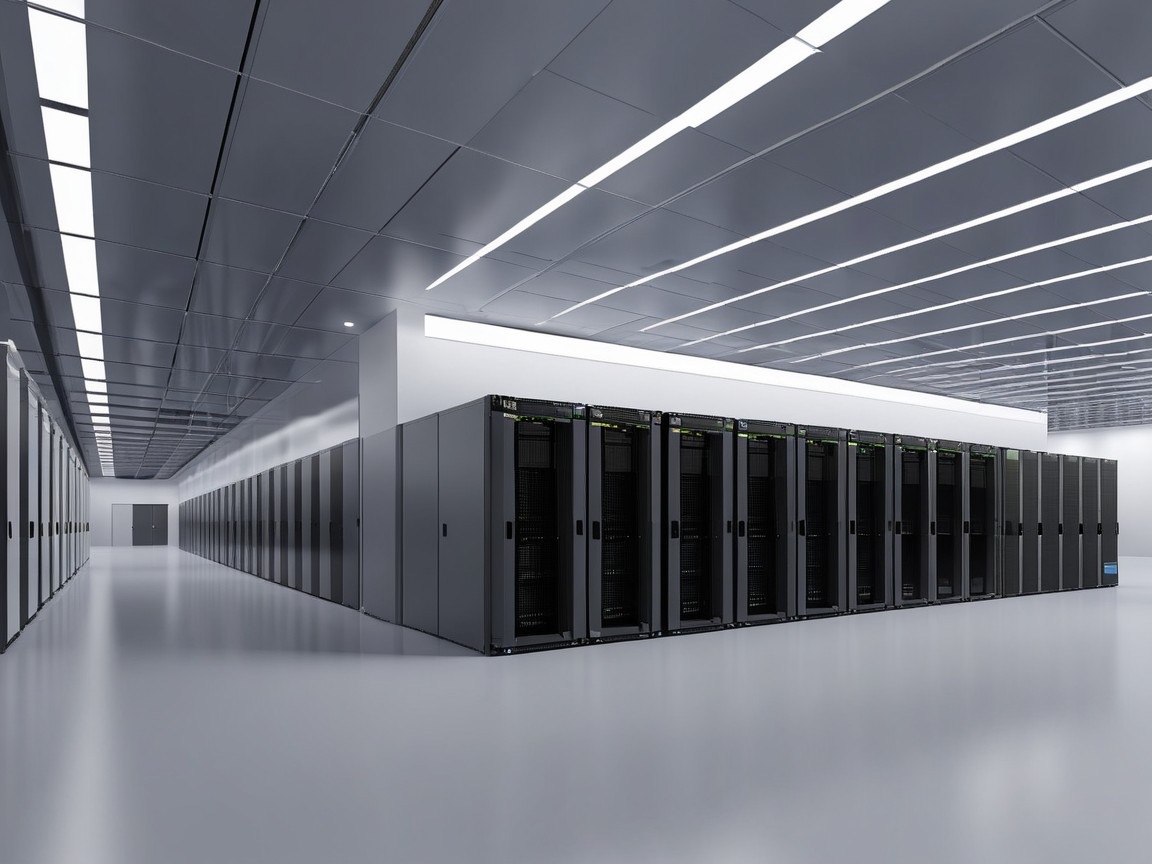
What large-scale data centre engineering demands
A hyperscale or large-scale data centre programme is not one building engineered carefully. It is a small number of structural and geotechnical decisions applied, with discipline, across a campus that might run to a dozen halls, several substations, a water or air-cooled plant yard, and a construction programme measured in phases rather than a single completion date.
What makes the engineering demanding is not the individual hall. A data hall's structure — a clear-span or lightly propped shed carrying a heavy, serviced roof — is not, in isolation, unusual. What is demanding is that the IT load, rack density and cooling strategy are frequently still moving after the structural frame is ordered, that the plant sitting on the roof or in a yard often outweighs the building it serves, and that a design decision made on hall one has to be either replicated correctly across every following hall or deliberately and traceably changed.
A firm capable of this work is not distinguished by the drawings it can produce for a single building. It is distinguished by how it handles repetition, late change, and the coordination load that a campus creates across structure, architecture and building services at once.
Repetition, modularity and why they change the engineering
Most large-scale data centre campuses are built from a repeated hall or pod typology: the same structural bay, the same plant deck, the same connection details, built multiple times with minor site-specific variation. Repetition is the economics of the programme — it is what makes the schedule and the budget work.
It also changes what correct means. A single building's error is a single building's problem. A typical detail applied across eight halls is either right eight times or wrong eight times, and the second case is usually discovered on site rather than on a drawing. The engineering task is therefore not just producing a correct typical design; it is proving, hall by hall, that what was built matches what was meant to be built, and tracking every deliberate deviation so that deliberate change and unintended drift are never confused.
This is where automated, model-based checking earns its place on a data centre programme specifically: comparing each repeated module against its reference design is a mechanical, exhaustive task, and it is one a machine should do, so engineering judgement is spent on the differences that matter rather than on re-reading identical sheets.
The role of BIM and coordination on a campus
On a single commercial building, structure, architecture and services can be coordinated with a manageable number of clash reviews. On a data centre campus, the services model is often as dense as the structural one — cable tray, busway, containment, chilled water and refrigerant piping, and fire suppression all compete for the same zones the structure has already claimed.
A federated model, built and issued under a disciplined ISO 19650 workflow, is what makes that coordination tractable. Structure, architecture and the mechanical and electrical models are combined, checked against each other on a defined cycle, and clashes and near-clashes are closed out and recorded rather than discovered on site. Penetrations are a recurring failure point: a slab opening exists in the structural model, the architectural set and the services model, and a data centre programme routinely finds that it exists correctly in only one of the three.
Coordination is not a phase that finishes. On a live campus it runs continuously against a moving IT and cooling design, which is precisely why it needs to be a checked, model-based process rather than a periodic meeting.
How to evaluate an engineering partner: eight questions
Capability claims are inexpensive to make. The following questions are harder to answer well than to ask, and the quality of the answer, not the answer itself, is usually the useful signal.
- Which structural code and national annex governs the design, and is that decision recorded before modelling starts? A firm that cannot answer in one sentence will decide it by accident, hall by hall.
- Can they show a check record for a repeated module, not just describe a process for controlling repetition? A record is evidence. A description is a claim.
- Who signs the package, and what is that person's actual role on this job? Named and accountable is a different thing from senior-sounding.
- How is a change to one hall propagated and re-verified across every hall built from the same template? This is where module drift is caught or missed.
- What happens to the drawings when the IT load or cooling strategy changes after the frame is ordered? On this programme type, that is not a hypothetical.
- Which facility standards do they already work to, without being prompted? Fluency here is a reasonable proxy for sector experience.
- How is information managed if the client requires security-minded delivery? Not every campus needs it, but a firm should know what changes when one does.
- What is handed over at completion — model, register, issue history and check record, or a folder of drawings? The answer tells you what the operator will actually have in year five.
Standards a capable firm will name without being asked
A firm with genuine data centre depth talks in specifics, not generalities, and the specifics are checkable.
Structurally, that means AISC 360 and AISC 303 in North America, EN 1993 and EN 1992 with the National Annex of the country of construction and EN 1090-2 execution class across Europe and the UK, or AS 4100 and AS 3600 in Australia and New Zealand — named as the governing code for this project, not as a general capability.
Facility-side, the standards that recur are EN 50600 and its international counterpart ISO/IEC 22237 for data centre facilities and infrastructure, ANSI/BICSI 002 for design and implementation practice, ASHRAE thermal guidance for the environmental envelope the structure and plant have to serve, and the Uptime Institute Tier classification the client has committed to. Where the campus requires it, ISO 19650 governs information management generally and ISO 19650-5 governs it under security-minded conditions. A firm that names these unprompted, and can explain what each one changes on a drawing, has almost certainly done the work before. One that offers only a general assurance of compliance has not been asked to prove it yet.
Delivering at campus pace
A campus programme is rarely lost to a wrong answer. It is lost to a right answer that arrived late, or a change that took a week to propagate through eight halls when the programme allowed a day.
That is an argument for a specific kind of delivery model, not just a capable one. Where the repetitive production — typical details, repeated modules, the bulk of the drawing set — is produced by an AI-driven system and checked exhaustively before anyone reviews it, a second hall does not cost what the first one did, and a late change is executed and re-verified across every affected module in the time it used to take to find them. What does not change, and should not, is accountability: one senior engineer reviewing the package and signing it, on one register, as one delivery partner answerable for the whole scope rather than a set of individually correct pieces that were never checked against each other.