ARTICLE
How to Choose a Structural Engineering Partner for a Chemical Plant
Chemical plant structures carry containment, corrosive environments and hazardous-area constraints that a conventional building code never has to answer. Choosing a structural partner for one starts with whether they have actually designed against those constraints, not just steel and concrete in general.

What makes chemical plant structures different
On a chemical plant the process design comes first, and the structure exists to carry it — which means structural scope is shaped by disciplines a conventional building code never touches.
- Pipe racks set the grid. Rack spacing, loading and levels follow the piping design, and the steel has to accommodate a pipe stress analysis that is often still being finalised when the rack is detailed. Process piping itself is typically designed to ASME B31.3 or the equivalent process piping code, and the rack has to accommodate the loads and thermal movement that analysis produces, not the other way around.
- Equipment defines its own support. Vessels, exchangers and packaged units each carry supplier-specific loads, nozzle orientations and access requirements that reach the structural drawing directly from the equipment supplier, sometimes well after the structure is first sized.
- Hazardous-area classification constrains the structure. Classified zones limit material choice, penetration sealing and access arrangements around platforms and stairs near process equipment.
- Containment and corrosion are structural, not incidental. Bund walls and containment slabs are sized to hold a defined volume, and coating system, cathodic protection and material grade are recorded at element level because the plant will be audited against exactly that record, sometimes years later.
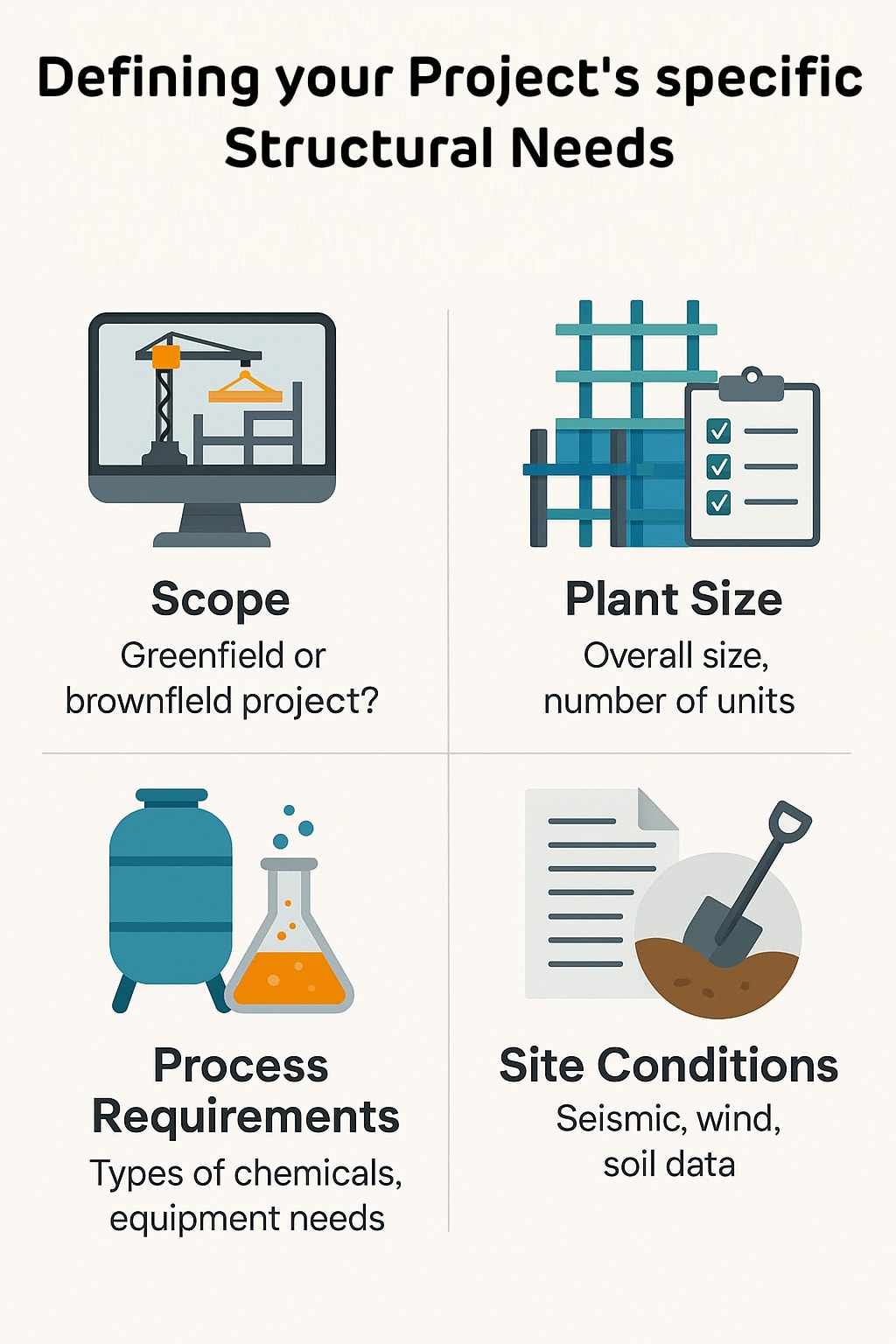
- Site conditions compound the loading. Seismic zone, soil bearing capacity and whether the site is greenfield or an operating brownfield plant all feed into a foundation design that already has to carry unusually concentrated equipment loads.
The engineering scope a plant package needs
A chemical plant package is structural steel and reinforced concrete detailed against a piping and equipment model that keeps moving, so the packages have to stay open to revision without losing control of what has already been issued.
- Steel detailing for pipe racks, equipment support steel, access platforms, stairs and ladders, issued with the fabrication data the shop runs on.
- Rebar detailing for equipment foundations, pile caps, bund walls and containment slabs, sized to the loads the equipment supplier confirms.
- BIM modeling and coordination between structure, piping and the equipment models, where clash resolution around racks and platforms is most of the coordination effort.
- Drafting and as-built documentation for the controlled issue set and the record the plant will hold for the working life of the asset, not just for construction.
Standards beyond the structural code
Chemical plant structures sit under the general structural code plus a layer of process-industry standards that shape corrosion protection, hazardous-area classification and documentation.
Structurally, that is AISC 360 and ASCE 7 for loads in North America, EN 1993 for steel and EN 1992 for concrete under Eurocode, with the National Annex and EN 1090-2 execution class across Europe, or AS 4100 and AS 3600 in Australia. Alongside the structural code, process standards such as the API tank and vessel series and the relevant hazardous-area classification standard set constraints that reach the structural drawing directly: material selection, coating systems and clearances around classified equipment. ISO 9001 quality management is common ground for a firm working at this level of documentation discipline. Corrosion allowance, coating specification and inspection access are recorded at element level, because plant documentation is built to be audited — sometimes years after installation — against exactly what was issued.
What to evaluate in a structural partner
The evaluation questions for a chemical plant follow directly from what makes the structure different.

- Experience with corrosive and hazardous environments. Ask how coating systems, cathodic protection and material grade are recorded, and whether hazardous-area clearances are checked against the classified zone drawing as a matter of routine.
- A defined process for revised equipment data. Vessels, exchangers and packaged units are frequently resized or relocated after the structure is first designed. Ask how foundation and support steel loads are re-checked when a supplier issues a revised drawing.
- Containment detailing as a first-class deliverable. Bund walls and containment slabs need to be sized and detailed to hold a defined volume, not treated as a concrete kerb finished at the end of the package.
- Coordination discipline with the process team. Pipe rack loading needs to be checked against what the piping stress analysis actually states, not the preliminary figure the rack was first sized to.
- Documented quality management. Ask for evidence of a quality management system such as ISO 9001 in practice rather than the certificate alone — a named reviewer, a check record, and a defined set of rules each package is tested against before it is issued.
Where chemical plant engagements go wrong
The failure modes on a plant programme are specific enough to name.
- An equipment load revision is missed. The structural drawing is issued against an early supplier figure, the supplier revises it, and nobody re-checks the foundation or support steel against the new number before fabrication.
- Containment is under-detailed. A bund wall or containment slab is sized to look right rather than calculated to hold a stated volume, which is not something an inspector accepts on inspection.
- Corrosion callouts go missing. An element is issued without a coating or material specification, which is a defect an audit will eventually find, often years after the structure was built.
- Price is agreed before the scope is fixed. A quote produced before the process design and equipment list have settled is a quote for a different, smaller job than the one that actually gets built.
Structuring the engagement around a shutdown or schedule
Tie-in and modification work on an operating plant is usually scoped against a shutdown window that will not move, because the cost of extending it is measured in lost production, not a schedule variance line. That argues for a commercial structure built around defined packages — one rack, one unit, one foundation group — rather than a single lump figure for the whole plant, so a late equipment revision can be priced and absorbed without renegotiating everything else.
Before work starts, agree how an equipment supplier's revision reaches the structural register, who re-checks the affected elements, and what evidence travels with the package at handover — not just final drawings, but the model, the register and the check record the plant will need the next time it is modified. It is also worth agreeing what happens if a supplier revision lands inside the shutdown window itself: which elements can still be re-verified in the time remaining, and which decisions have to be made on the best available data and flagged for confirmation afterward. That is what makes an engagement survive contact with a shutdown date that will not move.