ARTICLE
Choosing a Structural Engineering Partner for Power Plant Projects
Power plant structural engineering carries constraints conventional building work does not: seismic and containment requirements, sustained high operating temperatures, and codes that vary by plant type. Choosing who delivers it is not a decision to make on price alone.

Why power plant structural work is a different discipline
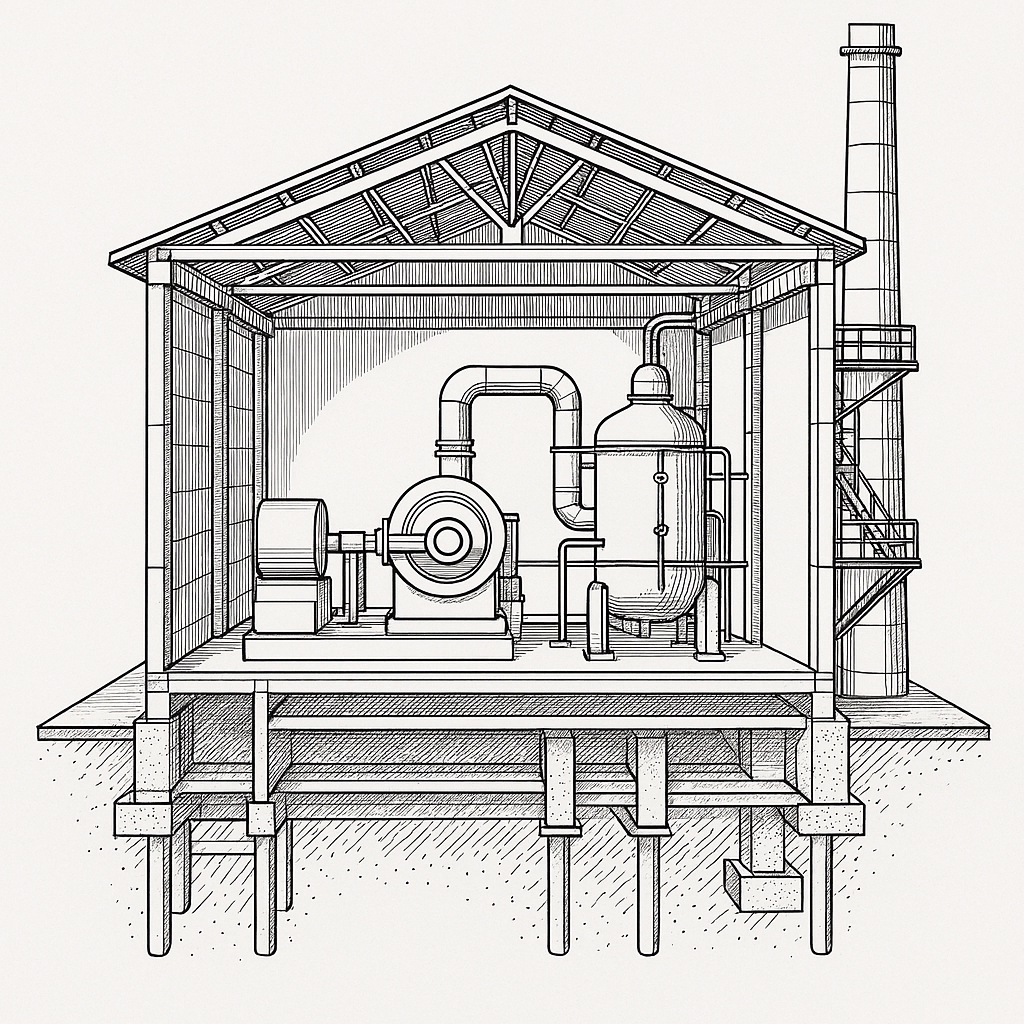
A power plant is not a heavier version of a commercial building. It is a different structural problem depending on what kind of plant it is. Nuclear facilities carry seismic and containment requirements that go well beyond a conventional structure's design basis, and the structural engineering has to satisfy both a general building code and a nuclear-specific standard at the same time. Thermal plants put boilers, ducting and chimneys through sustained high operating temperatures, which drives material selection and connection design in ways a standard commercial specification never has to consider. Renewable installations bring their own constraints: lighter, weather-resistant framing, often on sites and foundations that were not built with heavy structural loads in mind.
None of this is exotic knowledge in the abstract, but it is knowledge a firm either has, demonstrated on comparable work, or does not. That is the first and most consequential filter, before price, before software, before anything else on a shortlist. Getting it wrong is not a paperwork problem: a structural scheme that assumes the wrong operating environment can mean a redesign well into a programme that a project timeline was never built to absorb.
What to weigh when evaluating a partner
Beyond direct plant-type experience, a handful of factors separate a structural engineering partner that performs from one that merely presents well.
- Comparable project history: not just power generation in general, but the specific plant type — nuclear, thermal or renewable — and a scale similar to what is being planned.
- Project management discipline: a clear planning process, defined milestones, and a track record of holding a programme to them.
- Communication and coordination: how the firm keeps architects, contractors and civil engineering teams aligned, and how quickly it responds when something needs a decision.
- Regulatory familiarity: direct experience with the specific regulator and permitting process the project sits under, which shortens the path from design to approval.
- Sustainability practice: whether energy-efficient design and reduced-impact material choices are a working habit or an afterthought added to a proposal.
- A verifiable track record: references who will speak specifically to reliability and quality, not just a portfolio page.
None of these show up clearly in a glossy proposal. They show up in reference calls, in how a firm answers a specific technical question on the spot, and in what its past clients say when asked what went wrong and how it was handled.
Technology and coordination
Power plant structural work is now largely BIM-based, and for good reason: a shared model lets structural, architectural and civil teams work from the same coordinated information instead of reconciling separate drawing sets after the fact. Structural analysis and detailing software built for this scale of project should be standard practice, not a differentiator a firm leads with. The differentiator is how well the model is kept current and how quickly conflicts get resolved once they are found.
Real-time model access also changes what a client-side team can do during construction: monitoring progress against the model, checking cost estimates against what is actually being built, and catching a misalignment while it is still a drawing change rather than a site problem. Ask what a firm's coordination workflow actually looks like day to day, not just which software is licensed. That responsiveness, more than the brand of software on the licence, is what determines whether the model stays useful once construction is underway.

Safety standards and sustainability expectations
The applicable codes shift with plant type, and a credible partner should be able to name them without hesitation. Nuclear work is governed by containment and pressure-vessel standards on top of the general structural code. Thermal plants have their own standards for chimney and stack design. Every plant type sits inside the general framework of a national or international building code — the IBC, the Eurocodes, or a local equivalent — plus the standing structural references most engineers already work to, including AISC, ISO, ACI and ASCE, depending on jurisdiction and material.
Sustainability credentials matter here too, and are worth verifying rather than taking as a proposal line: certifications such as LEED or BREEAM where relevant, and a concrete description of how energy-efficient design and material selection show up in past projects rather than a general statement of commitment. None of this should be taken on trust. Ask which standard governs which part of the structure, and ask to see how a past project demonstrated compliance rather than simply asserted it.
Assessing project management and delivery capability
Technical competence gets a firm onto a shortlist. Delivery capability is what determines whether the project actually finishes on time and on budget, and it is worth assessing as deliberately as the engineering itself.
- Planning: a clear, comprehensive project plan with defined goals, timelines and budgets, not a schedule that arrives after work has already started.
- Communication: responsiveness to queries and a demonstrated habit of keeping every party informed and aligned, not just the client.
- Risk management: a stated method for identifying and mitigating risk, with examples of it working on a past project.
- Quality control: a process that verifies the work meets the required standard, with evidence rather than an assurance.
- Collaboration: a demonstrated ability to work alongside architects, contractors and the client's own team without every coordination point becoming a bottleneck.
A practical evaluation process
A shortlist earns its name by narrowing on evidence, not marketing material. Start with certifications that are actually checkable, such as ISO 9001, and a portfolio of comparable projects with outcomes that can be verified rather than just described. Contact references directly and ask about reliability, responsiveness and how the firm behaved when something went wrong, which tells you more than how it behaved when everything went right.
Where the scale of the project allows it, a smaller pilot engagement before the full commitment is worth the extra step: it tests communication, quality and responsiveness under real conditions rather than in a proposal. Structured interviews with the actual team who would work on the project, not just the people who present the proposal, close the gap between what a firm says it does and what it is likely to actually deliver. None of these steps is expensive relative to the size of a power plant programme, and each one narrows the gap between a proposal and what actually gets delivered.